



How to Recognize Non-Toxic Cleaning Products
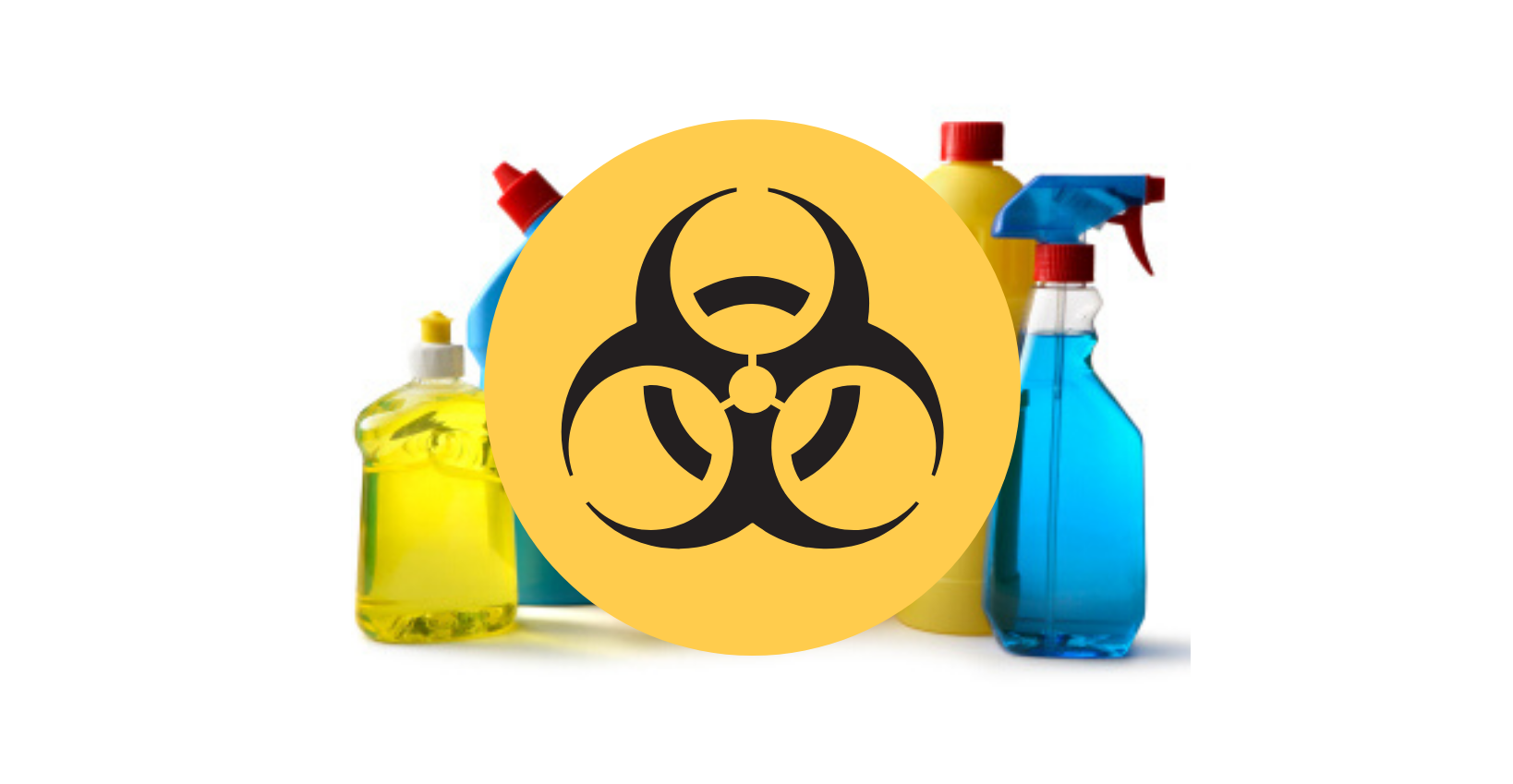
Especially in these times when we spend a lot of time at home and perhaps clean more often, it is important to remind ourselves that it matters what substances we come into contact with daily. Having a non-toxic home is definitely worthwhile and ultimately benefits everyone who uses the living space.
What is Non-Toxic Detergent
To begin with, it is necessary to say that the term non-toxic detergent (or cosmetics, which we will address in another article) is a relatively new term and not clearly defined. Essentially, it refers to products that are not harmful to the human body or animals in any way and are also easily biodegradable in nature. They contain none or only an unavoidable minimum of synthetic components and do not include unnecessarily many ingredients. This reduces the possibility of the "cocktail effect," which we know from food but also applies to cleaning agents and cosmetics. Of course, many certified organic products and ecological cleaning agents fall under this non-toxic concept. As you will see below, certifiсates cannot be fully relied upon.
Harmful Ingredients in Cleaning Products
The information we provide may be somewhat scientific but will basically help you get oriented right from the start. Mainly, you will see which ingredients to completely avoid in the composition of cleaning agents. The list of harmful ingredients is fundamental, although often it is necessary to consider the specific purpose of the cleaning product. We rely on information from official chemical databases and scientific articles, cosmetic ingredients databases like EWG, as well as practical experience. At WERECO, we monitor developments in this issue and update data continuously. However, the basics remain the same. Below you can read which ingredients you will not find in real non-toxic detergents.
1. SLS and SLES
Surface-active, anionic surfactants (this term mainly appears in cleaning and laundry agents). As the name suggests, these are surface-active substances that capture dirt, trap it, and rinse it away with water. During this process, a thick foam is produced, which you commonly see during washing or laundry. They are synthetic, usually petroleum-based compounds. Depending on the manufacturing process, SLS and SLES may be contaminated with carcinogenic 1,4-dioxane and ethylene oxide, even in measurable amounts in the final products. They accumulate in laundry and can be responsible for various allergic reactions. They not only remove dirt but also the protective film of the skin. If you do not use gloves during normal washing and cleaning, the skin remains dry and irritated. Thus, it loses its natural immune function. These SLS and SLES compounds are very irritating especially for small children, so washing clothes with conventional detergents made for children is definitely not recommended. They irritate the skin, mucous membranes, eyes, and are toxic to aquatic organisms. Their advantage is low manufacturing cost. This is one of the reasons conventional detergents appear cheaper.
2. Methylisothiazolinone
A preservative and antimicrobial additive in cosmetics and cleaning products. Also known under the abbreviation MIT. It is a common component in construction products (various paints, tube silicones, premixed compounds). However, it is a very strong allergen, provable only by epicutaneous tests. It disrupts immunity, is one of the causes of eczema and other autoimmune skin diseases. In vitro studies point to possible neurotoxicity; in mouse tests, it showed negative effects on cellular pathways affecting neuron development even at low concentrations. High doses of MIT had toxic effects on lungs and digestive tract. Current European legislation allows the use of MIT in low amounts in rinse-off products, so you may find it in regular cleaning products, especially liquid ones, which are the majority. It is often found in fabric softeners, stain removers and paradoxically even in some ecological products. A complete ban on MIT exists in Canada and Japan. Preserving liquid products with other agents is not as difficult. The company Sonett routinely proves this by preserving with plant-based alcohol and natural extracts.
3. Ethoxylated Compounds
Ethoxylated compounds are also common preservatives not only in liquid products but also in various tablets (for dishwashers, toilets, etc.). Phenoxyethanol alone can be found even in products certified ECO-CERT. It is a synthetic fragrance often masked under the terms fragrance/perfume in ingredient lists since manufacturers are not obligated to name it literally. This is another allergen causing problems from eczema to anaphylactic reactions. In 2008, the U.S. FDA ordered the removal of a nipple cream for breastfeeding women from the market after it was found to contain phenoxyethanol, which negatively affected the nervous system of nursing infants. It caused waking problems, reduced appetite, vomiting, and diarrhea. This substance remains widespread in cosmetics and detergents. PEG-100 is made using carcinogenic ethylene oxide, and its by-product 1,4-dioxane may remain in the final product. PEGs generally can cause skin irritation in sensitive individuals. These are synthetically produced compounds, more common in cosmetics but also found in cleaning products.
4. Phthalates
Esters of phthalic acid are again hidden on packaging labels under the term fragrance/perfume (legislation allows this). They are endocrine disruptors, demonstrably adversely affecting the hormonal system, reducing fertility, and are especially toxic during prenatal development. They cause so-called feminization in boys, disrupting their hormonal balance. According to EU Directive 67/548/EHS, they are officially classified as substances toxic to the reproductive system, and the European Union banned the use of the phthalates DBP (dibutyl phthalate) and DEHP (bis(2-ethylhexyl) phthalate) in cosmetics. However, phthalates are a whole group, and some are still approved for use in cleaning products or everyday items. Studies found many people, including children, have high levels of various types of phthalates in their urine. Therefore, it is important to avoid any fragrances in detergents (this also applies to cosmetics) whose origin is not clearly declared.
5. Parabens
Infamously known ingredients mainly in cosmetics but also found in cleaning products. They serve as cheap preservatives and have antimicrobial properties. Parabens are insoluble in water but penetrate the body through the skin. European legislation sets limits on their use in cosmetics applied to the skin but does not regulate cleaning agents. The Danish government banned their use in products intended for children under 3 years in 2011. The legislation does not consider parabens being present in multiple products that we commonly use, leading to a cumulative effect. Parabens are endocrine disruptors by activity. In vitro studies have shown their ability to bind to estrogen receptors. They disrupt hormonal balance, especially in men reducing testosterone levels and sperm production. They increase cell sensitivity to UV radiation, which can lead to uncontrolled cell growth and subsequent melanoma development. Therefore, you will not find parabens in non-toxic products, and if you see them listed in any product’s ingredients, do not buy it. There are already many alternatives on the market; for example, Badger Balm is a suitable non-toxic alternative to conventional sunscreens.
6. Cocamidopropyl Betaine
This is a very strong allergen, causing eye irritation, eczema, and rosacea. It may contain harmful contaminating substances (dimethylaminopropylamine, amidoamine, sodium monochloroacetate, and nitrosamines). These belong to skin sensitizers and are responsible for many allergic reactions. Particularly nitrosamines have strong mutagenic and carcinogenic effects. These substances do not appear in the product composition because they arise as by-products during manufacturing and are common contaminants. Suitable manufacturing processes can reduce their concentrations to a minimum but completely eliminating them is difficult. Cocamidopropyl is synthetically produced by reacting coconut oil with 3-dimethylaminopropylamine (DMAPA). The problem is impurities formed during production, so the resulting cocamidopropyl betaine in the final product can contain various amounts of contaminating chemicals. These substances then cause dermatitis, eye, and lung irritation. Betaine is generally declared by manufacturers as a milder replacement for SLS and SLES, but its safety is questionable.
7. Benzyl Alcohol
Benzyl alcohol can come from two sources. It occurs naturally in certain types of foods and plants (jasmine, ylang-ylang, hyacinth, partly in apricots, cranberries, cocoa) or is synthetically produced. It is used as a preservative additive and also for fragrance effect, having a sweet fruity scent. In conventional cleaning products, it is almost exclusively synthetic. The permitted limit for use in cosmetics is officially 1% of the total product volume. For cleaning products, legislation does not specify limits. Naturally occurring benzyl alcohol has a maximum concentration of only 0.005% in the entire product (such as essential oils from jasmine and ylang-ylang). In such cases, the product is marked with an asterisk or clearly verbally declares the natural source. Synthetic benzyl alcohol is permitted at much higher concentrations, which can trigger strong allergic reactions: eczema, dermatitis, breathing difficulties, skin pigmentation changes, eye irritation. In the past, it was used in neonatal care as an antimicrobial additive in solutions for flushing intravenous catheters but caused poisonings and several deaths, leading to discontinuation. Retrospective studies found high benzyl alcohol concentrations in urine of newborns and infants, who also showed symptoms like low blood pressure, intracranial bleeding, neurological disorders, and breathing difficulties. Therefore, an absolute ban on its use in products for children was implemented.
8. Synthetic Fragrances
This is probably the most widespread group of substances not falling under the non-toxic concept, although they are often found even in ecological products. About 95% are petroleum derivatives, often containing the aforementioned methylisothiazolinone or benzyl alcohol. They are common allergens, and the problem is that manufacturers are not required to list their exact names on the product label. Among these substances are endocrine disruptors and substances toxic to the reproductive or nervous system. They are often bioaccumulative, and the human body cannot fully degrade them. Our experience says that if the fragrance truly comes from a natural source, the manufacturer gladly proudly displays this on the packaging. Otherwise, we recommend not buying such products and verifying the full composition with the manufacturer.
9. Nanomaterials
Nanomaterials are a relatively new and somewhat controversial group of ingredients. They are chemical substances consisting of particles whose size in at least one dimension ranges from 1 to 100 nanometers. Due to increased specific surface area, they have different physicochemical properties. There are many products on the market containing these nanoparticles, and they must be declared on the packaging. They are added to cleaning and cosmetic products for preservation, color or texture modification, and chemical reactivity changes. However, they also represent certain risks for the environment and the human body. European legislation has regulated nanomaterials use since 2012, but more precise and detailed regulations are continually being developed. In cosmetics, we typically encounter titanium dioxide or zinc oxide in nano form, especially in sunscreens. Recently, these particles have become components of various antibacterial mixtures, mainly titanium dioxide particles. While standard titanium dioxide poses no risk to humans and does not penetrate the skin, the nano-form has caused DNA damage, damage and death to developing fetuses, and extensive inflammatory reactions in mouse studies when inhaled.
Nanoparticles penetrate the skin or enter the body by inhalation, and their long-term effects on humans are not precisely documented. Mouse studies demonstrate that inhaled nanoparticles reach lungs and can move to other organs, remaining in the body for about six months. Some nanoparticles cross the blood-brain barrier and reach the brain. These effects were observed in animal models, and there is currently insufficient evidence regarding mechanisms in humans. We do not know how nanoparticles behave during transport and over prolonged periods in the body. Their specific properties are desirable for therapeutic applications under expert supervision. However, their use is inappropriate in cosmetics and cleaning or antibacterial household products, especially when their effects are insufficiently studied. Therefore, we do not consider products containing nanoparticles non-toxic and do not recommend their use.
Conclusion
Finally, we add that even ecological certificates do not guarantee that a product is truly non-toxic. Often these certificates address only packaging or manufacturing methods but less so the actual content. Some certificates permit certain amounts of the above ingredients, making it difficult for ordinary customers to navigate through information. At wereco.store, we have selected several verified manufacturers of cleaning products. Each has clear and straightforward ingredient lists on packaging and provides transparent information about its production (Sonett, Tierra Verde, Alchemix Laboratory, Sodasan). You can find their product selection in the e-shop.
sources:
(1) https://www.healthline.com/health/methylchloroisothiazolinone#mci-and-cancer
(2) https://journals.lww.com/dermatitis/fulltext/2013/01000/Methylisothiazolinone.2.aspx
(3) http://jpet.aspetjournals.org/content/317/3/1320.long
(4) http://www.safecosmetics.org/get-the-facts/chemicals-of-concern/methylisothiazolinone/#_ednref6
(5) http://www.safecosmetics.org/get-the-facts/chemicals-of-concern/phenoxyethanol/#_edn7
(6) https://www.slozeni-kosmetiky.cz/1-4-dioxane
(7) https://www.bcpp.org/resource/phthalates/
(8) https://ec.europa.eu/health/scientific_committees/opinions_layman/en/phthalates-school-supplies/index.htm
(9) https://www.ncbi.nlm.nih.gov/pmc/articles/PMC5750875/
(10) https://www.slozeni-kosmetiky.cz/cocamidopropyl-betaine-capb
(11) https://www.ncbi.nlm.nih.gov/pubmed/9455630
(12) https://ec.europa.eu/health/sites/health/files/scientific_committees/docs/citizens_parabens_en.pdf
(13) https://www.sciencedirect.com/science/article/pii/S0300483X07000340?via%3Dihub
(14) https://onlinelibrary.wiley.com/doi/abs/10.1002/jat.1358
(15) https://www.europarl.europa.eu/doceo/document/PETI-CM-575047_EN.pdf?redirect
(16) https://www.slozeni-kosmetiky.cz/benzyl-alcohol
(17) https://www.cdc.gov/mmwr/preview/mmwrhtml/00001109.htm
(18) http://www.safecosmetics.org/get-the-facts/chemicals-of-concern/synthetic-musks/
(19) https://echa.europa.eu/cs/regulations/nanomaterials
(20) https://www.ncbi.nlm.nih.gov/pubmed/16443688
(21) https://www.tandfonline.com/doi/abs/10.1080/08958370490439650
(22) https://ec.europa.eu/health/ph_risk/committees/04_sccp/docs/sccp_o_123.pdf
(23) https://cancerres.aacrjournals.org/content/69/22/8784.long
(24) https://www.ncbi.nlm.nih.gov/pubmed/11417628
(25) http://www.ilo.org/dyn/icsc/showcard.display?p_lang=en&p_card_id=0502