




Why is it not a good idea to use essential oils internally?
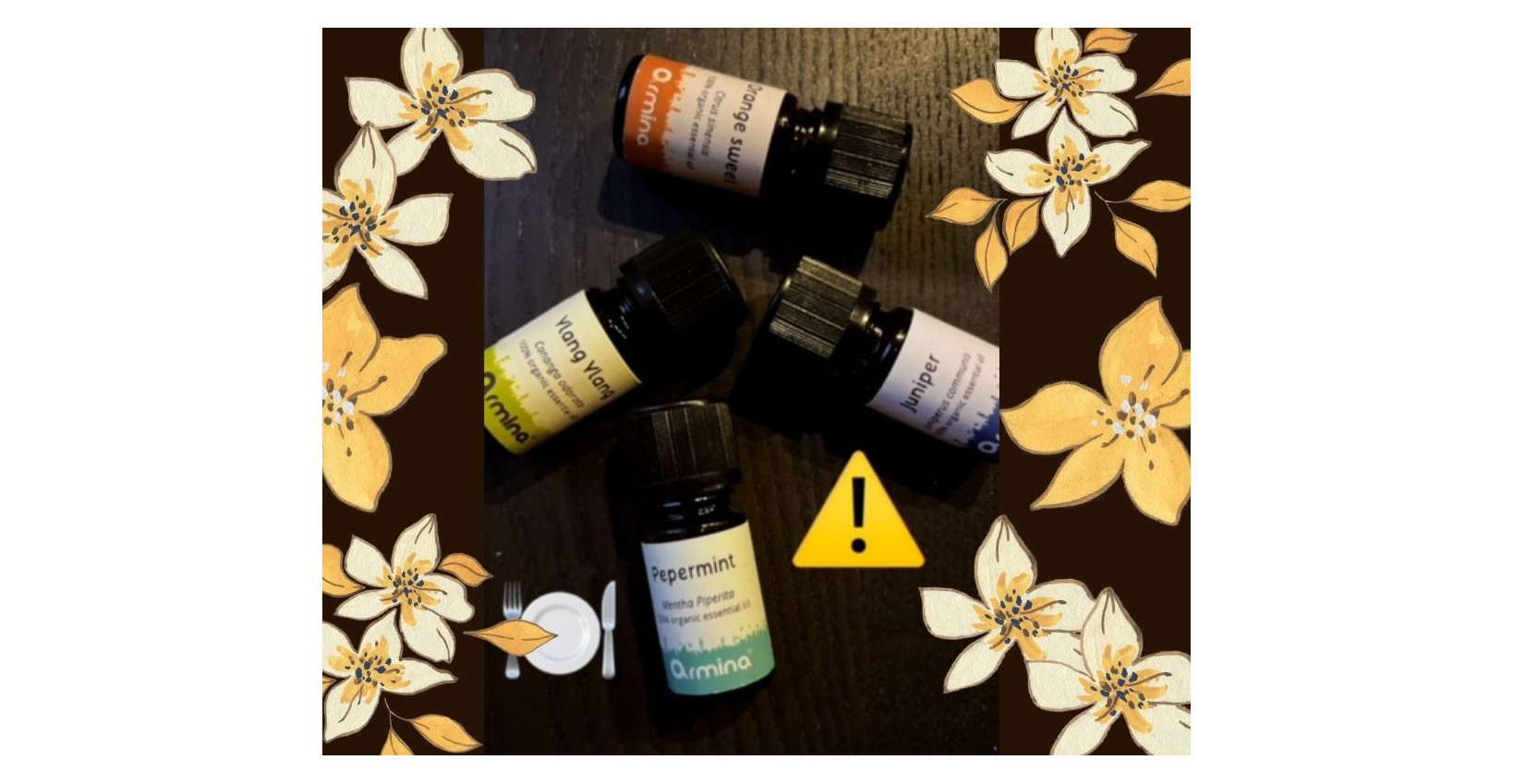
Internal use of essential oils
Internal use unfortunately spread from people's awareness due to catalogue sellers of essential oils without any aromatherapeutic education. Unfortunately, nothing can be done about them because our legislation does not address whether someone recommends internal use of essential oils. In the Czech Republic or Slovakia, they are not legislatively classified as pharmaceutical products or dietary supplements. Actually, sellers are not even legally obliged to inform you about possible health contraindications of essential oils. Which is quite problematic because many people here primarily perceive them as fragrances.
Risks of internal use
Internal use is therefore up to each individual. Of course, you can buy, for example, French or Belgian capsules with essential oils on the internet, which are used as prevention or during an ongoing disease. But that is somewhat different than dripping essential oil into a smoothie, cocktail, yoghurt or other foods and treats. Because the dosage is prepared by experts and if you buy these capsules, for example from France, possible contraindications are listed with them.
"The French school" is nonsense
Catalogue sellers especially like to rely on the tradition of internal use and boast so-called "the French school." According to them, it sounds as if it is common to pour x drops of essential oil into oneself daily and the French do it routinely. I lived in France for 3 years and commuted there for two more with my partner. The French use essential oils internally only on a medical prescription. Always in capsules mixed by a pharmacist and for a very limited time. Never as prevention.
For all descriptions of essential oil use, sellers have listed for whom they are suitable, their contraindications, and even with which medications they may interact. Some essential oils (those with abortive potential or neurotoxic potential) cannot be obtained without a medical or pharmaceutical license. Some have fallen victim to legislation against Absinthe manufacturers and are still not freely available. These mainly include wormwood or thuja.
Risks and contraindications
Every essential oil presents a potential allergic risk and this must be taken into account when using them. Sensitive individuals may also have great problems with very mild essential oils that are otherwise well tolerated. You can certainly drip a drop of lemon or orange into baking, but we are concerned with continuous internal use in honey, vegetable oil or unsuitable liquids such as juices or water. Essential oil cannot dissolve in the mentioned liquids, it is hydrophobic. It adheres to the mucous membrane and can subsequently burn it.
Using essential oils orally in honey or vegetable oil is also not the best idea. This is due to possible neurological poisoning; some essential oils, even if well mixed, can cause kidney or liver failure over a long period. A typical example, which can negatively burden and damage liver functions, is oregano, which is widely recommended for internal use. It is important to use essential oils as safely as possible, and skin application or inhalation is absolutely sufficient. If you really want to use something internally, reach for non-preserved hydrolates.
Pavlína Klaudová
graduate of the prestigious Tisserand aromatherapy institute