












We Compared Organ Nutrition, Spirulina and Digestive Enzymes for You: Can Plant-Based Supplements Replace the Animal Form with Their Effects?
We All Need Quality Food Supplements
Anyone interested in the quality of food supplements must keep in mind that simply not everyone can or wants to take those derived from animals. And because we also consider those who may, for some reason, find organ nutrition unsuitable or want to be sure they support digestion with non-animal enzymes, we looked into what we can offer you instead.
After thorough research, we found two useful food supplements that are absolute vegan must-haves if you have digestive issues or need a reliable source of everything your body requires to function well. And why not have both at home? You can kill two birds with one stone and at the same time support the overall health of your body. Which is especially useful during seasonal changes.
The Powerful and Promising Plant-Based Digestive Enzyme Bromelain Will Excite You
Bromelain is one of the plant-based digestive enzymes that rightly found its way into naturopathy. It is an active ingredient extracted from the pineapple stem (Ananas comosus), found in smaller amounts in its flesh too. Bromelain is more than an effective substance; it is a natural proteolytic enzyme that supports the breakdown of proteins into their more usable forms (amino acids and peptides). It is used in products applied to reduce inflammatory symptoms in the body and swelling.
When it will be useful for you:
- It is excellent for supporting the body's overall defense, promotes wound healing and reduces the incidence of inflammatory sites in the body. Several clinical studies reported quicker reduction of swelling and bruises in people given this enzyme.
- It is recommended for osteoarthritis and other painful musculoskeletal conditions because it acts as a mild analgesic and anti-inflammatory agent.
- It is used as an aid in treating cardiovascular diseases because it reduces platelet aggregation that causes thrombosis.
- It is indicated for constipation, speeding up stomach emptying.
- Strict adherence to the manufacturer, nutritional therapist, or physician's recommended dosage is necessary for bromelain. It is not recommended for pregnant and breastfeeding women, children under 6 years, people with kidney or liver failure, or individuals with coagulation abnormalities.
Spirulina as a Good Substitute for Organ Nutrition?
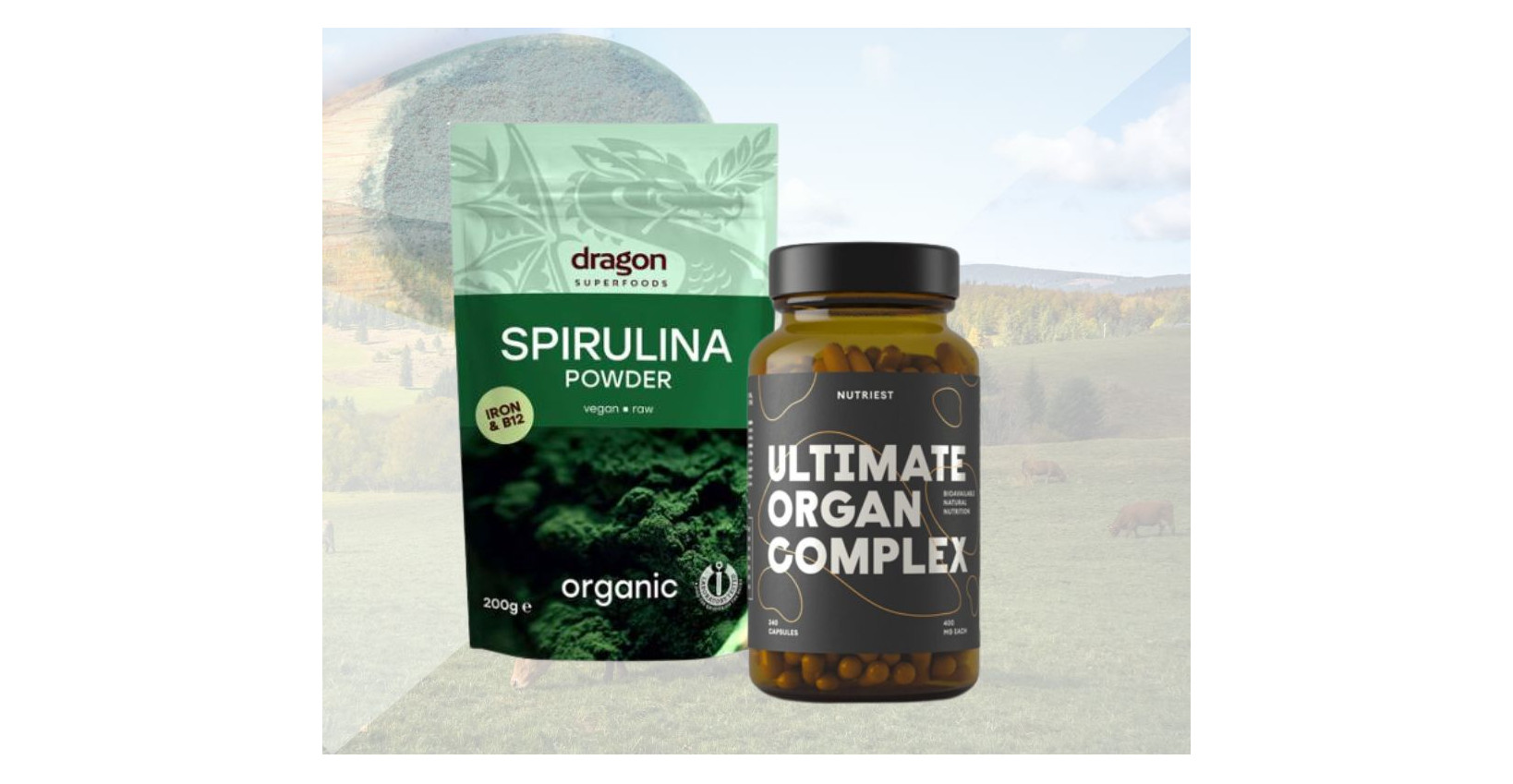
An absolute bomb that everyone who is prevented from trying organ nutrition supplements should have on hand is spirulina. It can quite effectively replace both complex and single-ingredient products derived from animal organs for those with ethical or other blocks against their use. Spirulina is traditionally used as a food supplement during food shortages and is recommended as an excellent source of many valuable nutrients for pregnant women.
For comparison, here is the composition of organ nutrition and spirulina:
Organ complex from liver, kidneys, heart, spleen, and thymus contains B-complex, fat-soluble vitamins D3, E, and K2, choline, and is also a source of iron, zinc, selenium, copper, phosphorus, potassium, magnesium, and manganese. It also contains folate and coenzyme Q10.
The nutritional profile of spirulina provides the body with all available amino acids (the structural units of protein) essential for protein synthesis (essential and non-essential, specifically leucine, tryptophan, methionine, phenylalanine, tyrosine), vitamins A, E, D, K, B1, B2, B3, B6, B8, B9, and B12. It is an excellent source of plant (non-heme) iron. It also contains other nutrients: magnesium, potassium, phosphorus, calcium, selenium, copper, zinc, sodium, manganese.
Phycocyanin (the green-blue pigment) strengthens natural immunity and supports body resilience. Generally, spirulina consists of 70% protein, 20% carbohydrates, 5% lipids, 7% minerals, and 3 to 6% water. It is one of the rare sources of gamma-linolenic acid (GLA) (30–35% PUFA) and linoleic acid, which belong to the omega-6 family. It also provides a strong antioxidant chlorophyll.
Note: Spirulina contains phenylalanine and is not suitable for those treated for phenylketonuria.
Tip on how to choose a food supplement: Whether you choose organ nutrition or spirulina, it is good to remember their origin and quality. Organ supplements from grass-fed sources or spirulina with organic certification ensure full quality and purity of the chosen product.
A Little Bit You Should Know About Digestive Enzymes
Digestive enzymes are quite trendy. You will find them either as standalone food supplements or as part of some fat burners. Generally, you can come across three groups of enzymes.
- Metabolic enzymes (act on bodily processes such as breathing, muscle movement, and maintaining our immune system).
- Food enzymes naturally present in unprocessed foods.
- Digestive enzymes (animal or plant origin).
We will not analyze their types here because it would be too lengthy, but we will focus on their main functions. Digestive enzymes are molecules involved in the digestion process. They are responsible for breaking down food so the body can better absorb the nutrients it needs to function naturally. Their deficiency in the body can lead to certain health complications. A typical example is a basic deficiency of amylase and lactase in gluten or lactose intolerance. Their levels naturally decrease from age 30 onwards.
How to know when it is good to start taking digestive enzymes:
- You suffer from bloating and abdominal pain, flatulence.
- You experience reflux, heartburn, frequent burping, sleepiness after meals.
- You feel tired, have trouble concentrating, and your moods often change.
- You struggle with headaches or migraines, have difficulty falling asleep.
- You experience musculoskeletal pains (muscles and joints).
- You have problems with hair and skin.
- You battle inflammations and worsened premenstrual syndrome.
- You are gaining weight.
- After medical consultation, they are also suitable for diabetics.