









Essential Oils and Animals, Can They Even Work Together?
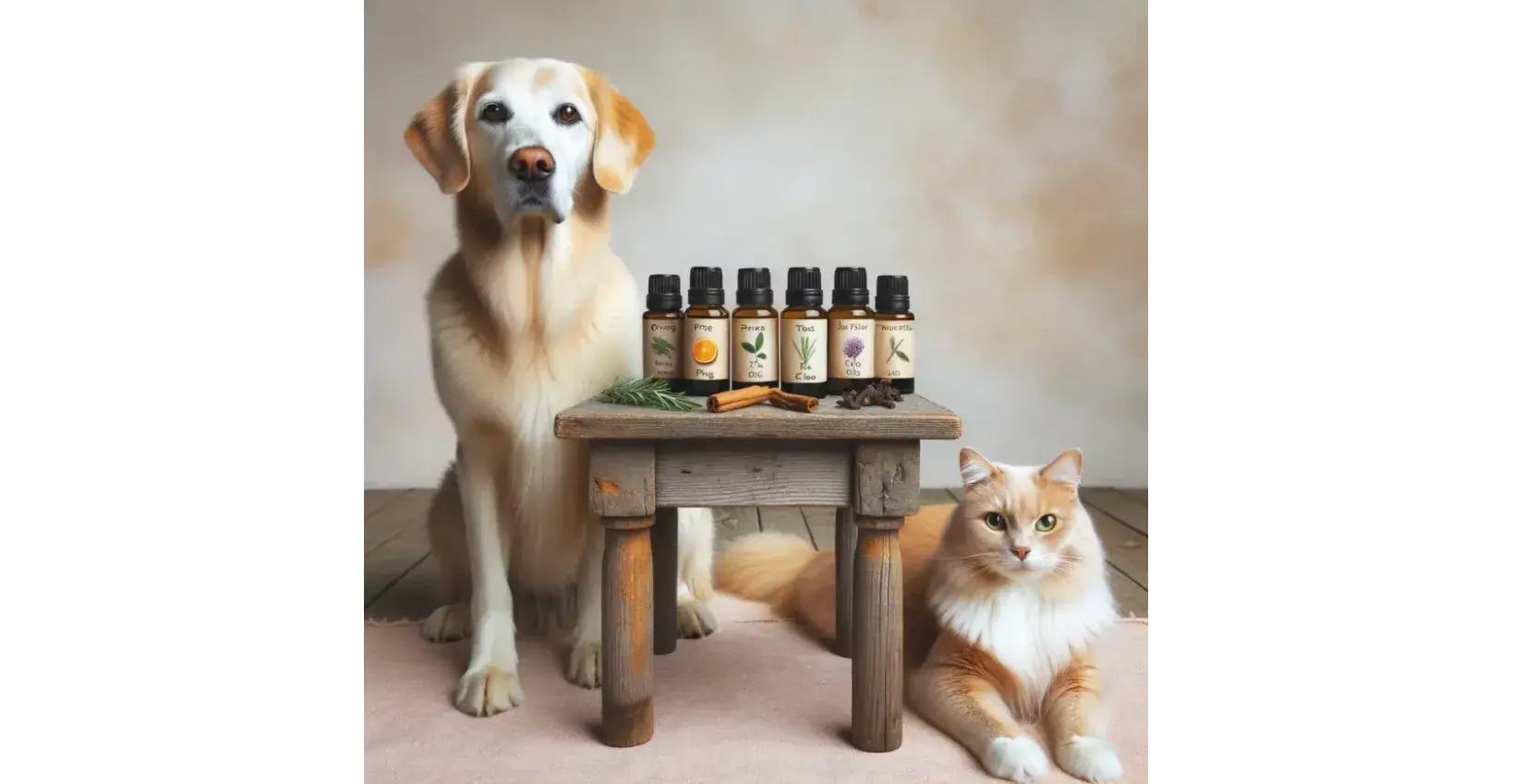
How French Veterinarians Work with Aromatherapy
Unfortunately, Czech doctors and veterinarians do not have essential oil chemistry or their possible interactions as part of their studies. In France, it is different, and essential oils are part of veterinary medicine. Therefore, pharmaceutical-educated people or doctors are able to determine interactions that may arise from using essential oils not only in humans but also in animals. Including very specific impacts on pets based on their anatomy. Essential oils are successfully used in treating larger animals, such as horses. Hydrolates are otherwise very popular, for example in treating eye problems in dogs and cats or addressing stressful situations.
Are Essential Oils Safe for Dogs and Cats?
Unfortunately, we must state that most essential oils are toxic to dogs and cats. It is also necessary to mention budgerigars and other birds commonly kept at home. Therefore, essential oils should not be used near them. Essential oil poisonings are quite common in animals. Cats, whose livers do not produce the enzyme capable of processing aromatic phenol molecules, are particularly at risk.
As a result, felines are threatened by liver failure, epileptic seizures, or other serious conditions. In extreme cases, internal damage to the liver, kidneys, and heart may appear. With dogs, it is different, but problems may occur if they are exposed to essential oils for a long time. Moreover, it is necessary to consider the size of the dog and also that animals are overall much more sensitive to smells and scents than humans, so essential oils may disturb them.
How Do Essential Oils Affect Animals?
Essential oils applied to the skin or fur of an animal can trigger an allergic reaction just like in humans. Another problem can occur when ingesting or inhaling them. If you use diffusers in a small space for a long time, some essential oils linger in the air for a long time, and exposure of the animal to their effect can cause real signs of poisoning. It is also necessary to be careful about their presence in cleaning products (typically eucalyptus).
If you have pets, avoid mopping with essential oils or dripping them into the trash bin. Moreover, it is necessary to consider the dog’s size and that animals are overall much more sensitive to smells and scents than humans, so essential oils may disturb them. If you want to use repellents with essential oils, it is good to consult their suitability with a veterinarian.
Why Are Animals More Sensitive to Essential Oils?
It is clear that the organism of pets is different from humans. Therefore, the use of aromatherapy products is much more complicated in animals. Dogs and cats, as macrosmatic animals, are very sensitive to smells. Therefore, strong scents, typical for essential oils, can cause mental discomfort and possible aggressive behavior (this is very common among cats exposed to atmospheric diffusion of essential oils) and stress them even more.
So, if you want to use lavender to calm your pet, you may be quite unpleasantly surprised that you achieve exactly the opposite. Another point to remember is the animal's body weight. Simply, two drops of essential oil act differently on a 65-kilogram woman than on a four-kilogram dog. The saying applies here that what makes a plant poisonous is its dose. And also perfect knowledge of its use and chemical composition.
Essential Oils Toxic to Dogs
- Cinnamon
- Pine
- Garlic
- Tea Tree
- Rosemary
- Lobelia
- Citrus
- Thymus
- Oregano
- Peppermint
- Wintergreen
- Geranium
- Clove
- Juniper
- Ylang-ylang
- Birch
Essential Oils Toxic to Cats
- Cinnamon
- Pine
- Garlic
- Tea Tree
- Rosemary
- Melaleuca - cajeput
- Eucalyptus
- Lobelia
- Citrus fruits (including lemon, lime, orange, or grapefruit, bergamot)
- Thymus
- Peppermint
- Basil
- Cassia cinnamon
- Oregano
- Wintergreen
- Geranium
- Clove
- Spruce (other conifers may also be problematic)
- Juniper
- Lavender (all types, including hybrids like lavandin)
- Ylang-ylang
- Oregano
- Birch
What Are the Symptoms of Essential Oil Poisoning in Pets?
How do you know that your pet may have problems and is experiencing essential oil poisoning? Typical symptoms, practically identical to those in humans, include:
- Lethargy
- Poor coordination
- Vomiting or excessive salivation
- Reddening of the gums
- Runny eyes and nose
- Slow heart rate
- Increased or slowed breathing
- Nervous system problems (e.g., tremors).
In cats, the following symptoms may appear:
- Asthmatic attacks and breathing difficulties.
- Dermatitis.
- Conjunctivitis.
- Vomiting and diarrhea.
If you suspect essential oil poisoning, it is necessary to seek a veterinarian immediately. Do not try to induce vomiting and do not give your pet any medicines without consulting its doctor. The best way to protect your pet from essential oil poisoning is to minimize its use. It is generally recommended to select lower-risk products (hydrolates) for households with animals. For cleaning, use unscented cleaning and washing agents. The same applies to treating the fur of animals. Essentially, essential oils used for animal care should be handled by a properly trained veterinarian. Following the above facts, as a non-toxic e-shop we cannot recommend the use of essential oils for animals to our customers.
Sources
https://www.centre-antipoison-animal.com/huiles-essentielles.html
https://www.aromatherapieveterinaire.com
https://vcahospitals.com/know-your-pet/essential-oil-and-liquid-potpourri-poisoning-in-dogs
https://www.aspca.org/news/essentials-essential-oils-around-pets
https://www.petpoisonhelpline.com/pet-safety-tips/essential-oils-dogs/
https://www.petpoisonhelpline.com/blog/essential-oils-cats/
https://www.ncbi.nlm.nih.gov/pmc/articles/PMC6617186/
https://www.ncbi.nlm.nih.gov/pmc/articles/PMC7870616/
https://www.sciencedirect.com/science/article/pii/S2214750018303391
https://authenticapets.com/en/blog/oregano-for-cats-dogs
https://wagwalking.com/cat/condition/oregano-poisoning
https://www.aspca.org/pet-care/animal-poison-control/toxic-and-non-toxic-plants/oregano
https://wagwalking.com/condition/oregano-poisoning
https://www.hindawi.com/journals/jt/2022/1995578/
https://efsa.onlinelibrary.wiley.com/doi/pdf/10.2903/sp.efsa.2020.EN-1760
https://www.cabbagetownpetclinic.com/blog/february-2020/how-do-essential-oils-affect-your-pet
French materials for aromatherapists