







Overcome urinary tract infection naturally and with effective prevention
There can be multiple causes of urinary tract inflammation
Cystitis occurs more frequently in women than men and often recurs, making life uncomfortable repeatedly. Some women suffer from it several times a year. One of the causes that can lead to urinary tract infection is acid-base imbalance. Simply put, your body’s pH is out of balance and the organism is disturbed by excess of acids or bases (resulting in acidosis or alkalosis).
Urine is excreted by the kidneys, stored in the bladder and allows the body to eliminate some waste. It consists mainly of water (95%), mineral substances (especially potassium and sodium), waste from protein degradation (uric acid, urea) and other metabolites. Urine is naturally acidic, but its acidity can increase if you struggle with body over-acidification. This can happen during prolonged stress load or improper diet, as well as poor oxygenation.
Another common factor causing urinary tract infection can be excessive consumption of sugars, coffee, processed foods (which often contain many hidden sugars). In such cases it’s good to consider your diet composition and significantly reduce intake of bread and refined products. Proper choice of menstrual products is also important, as fragranced varieties may worsen inflammation symptoms, plus avoid holding in the urge to urinate.
Support digestion and immunity, fight inflammation effectively
Even if it may not seem obvious, your digestion or specifically the state of gut flora plays a big role in managing urinary tract infection. Bowel emptying disorders (constipation) can cause congestion of the rectum. Pressure may be exerted on the bladder, leading to local inflammation. For successful prevention it’s advisable to choose effective probiotics or synbiotics (combinations of probiotics and prebiotics), which help improve overall immunity. Proper hydration is also crucial to support kidney function.
Kidneys need sufficient fluids (ideally clean filtered water) to work properly and dilute existing metabolites in urine. The less you drink, the more concentrated and acidic the urine, which can lead to bladder irritation.
Why supplement minerals is important
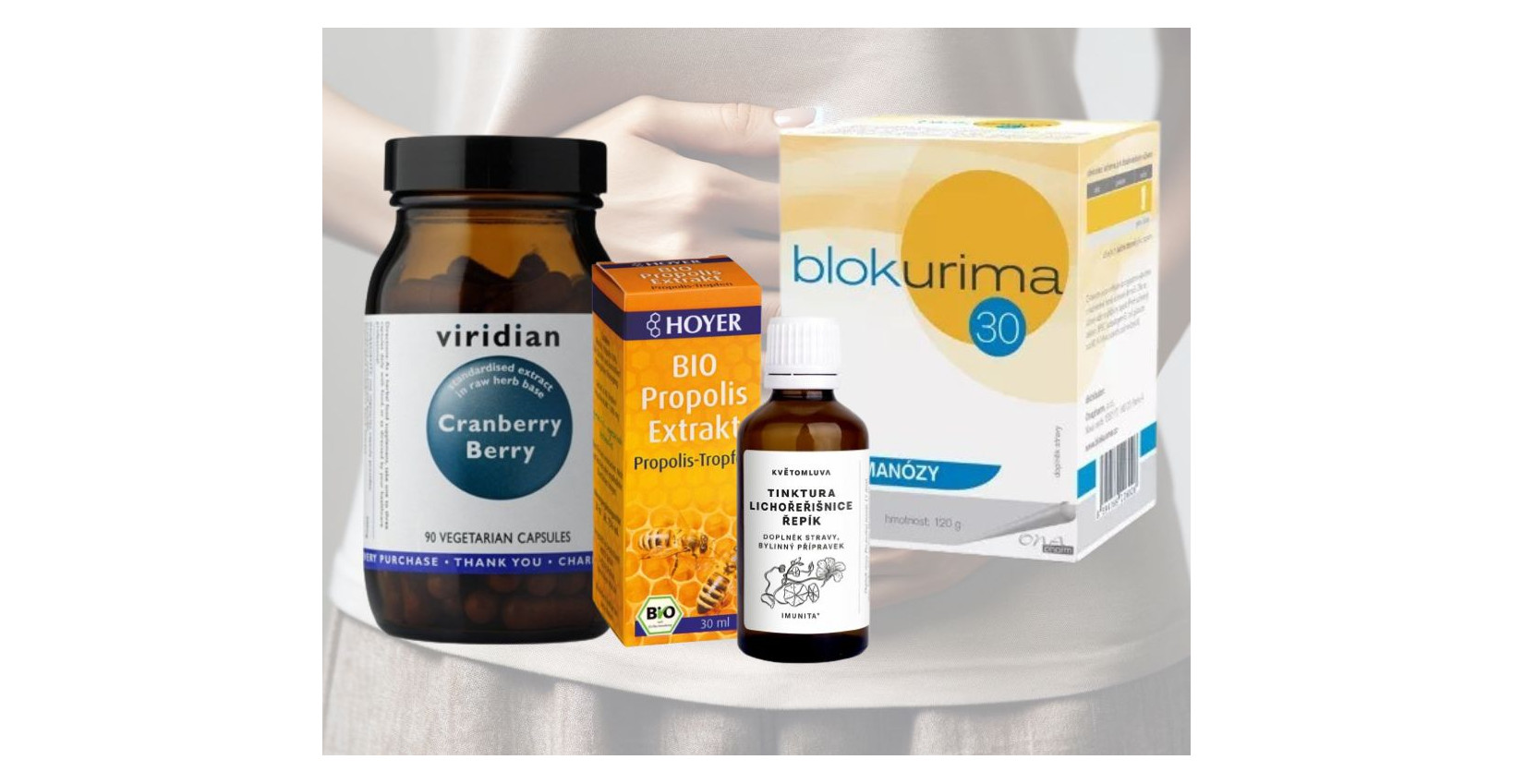
In oligotherapy (therapy using trace elements, part of naturopathy) minerals such as zinc (immune stimulant), copper (anti-infectious, aids immunoglobulin synthesis) and selenium (supports immune system) are recommended to improve resistance against urinary tract infections. Instead of taking three capsules, you can use a combination of all three in one supplement. As a dietary supplement rich in minerals, if you are not allergic to bee products, you can also use bee pollen or propolis – for adults an alcoholic tincture, for children a glycerin extract.
Effective helper for the urinary tract: D-mannose
Another great helper for urinary tract troubles is D-mannose, a simple sugar naturally present in small amounts in the body but not metabolized by it. Once absorbed, it acts as a molecular bait for E. coli, bacteria which cause over 80% of urinary tract problems. D-mannose is used as a supplement in powder or tablet form. Generally, the powder form is more user-friendly as it dissolves easily in water.
It is often combined with certain herbs traditionally used for urinary tract issues (e.g. heather). D-mannose absorbs quickly, reaching peripheral organs about 30 minutes after ingestion, then is excreted via urine. It cannot be converted to glycogen and so does not accumulate in the body. In vivo and in vitro studies have shown D-mannose’s ability to reduce bacterial load across the urinary tract. When taken for six months, the supplement proved effective in reducing recurrent urinary tract infections.
Regarding potential side effects, long-term use of D-mannose has shown no adverse effects. It is well tolerated by adults and children alike. Pregnant and breastfeeding women should consult their doctor before use.
Common phototherapeutic supplements to help eliminate bladder inflammation
Herbal supplements are popular helpers for cystitis. Besides the well-known celandine and cranberries, you can also try black cumin, artichoke, echinacea, garlic, nettle (a good diuretic and rich in minerals such as iron, copper, magnesium, zinc, plus potassium, calcium, phosphorus, manganese and flavonoids), as well as hibiscus, which is rich in anti-inflammatory vitamin C, and turmeric (or its extract curcumin). A somewhat surprising helper for urinary tract infections may also be green tea rich in flavonoids.
In phytotherapy, hydrosols from lemon, rose, rosemary, blackcurrant are used to support relief of discomfort during urinary tract inflammation. Dose is one teaspoon in a glass of water two to three times daily. Adults without contraindications for licorice and thyme may try a tincture of these herbs, complemented by organ nutrition or the individual minerals listed above. Note that alcoholic tinctures are not suitable for children under twelve years. For younger children, chamomile tea is recommended.
Warning: If you want to support reducing inflammatory symptoms with herbal products and take pharmaceutical treatments (e.g., for diabetes, blood thinners, or if you have asthma or epilepsy), you should consult your doctor about supplements due to possible contraindications.
Sources:
https://pubmed.ncbi.nlm.nih.gov/28756925/
https://healthlibrary.brighamandwomens.org/Library/diseasesconditions/Adult/Pregnancy/19,Licorice
https://www.nj.gov/health/spinalcord/documents/reports_pubs/3011_01.pdf
https://www.ncbi.nlm.nih.gov/pmc/articles/PMC6708089/
https://www.ncbi.nlm.nih.gov/pmc/articles/PMC5328488/
https://www.ncbi.nlm.nih.gov/pmc/articles/PMC6107218/
https://pubmed.ncbi.nlm.nih.gov/25875220/
https://www.pnas.org/doi/full/10.1073/pnas.1820870116
https://www.ncbi.nlm.nih.gov/pmc/articles/PMC3684790/
https://www.ncbi.nlm.nih.gov/pmc/articles/PMC7395894/
https://www.ncbi.nlm.nih.gov/pmc/articles/PMC8944421/
https://nutritionj.biomedcentral.com/articles/10.1186/s12937-022-00769-x