













What you illuminate with matters, respect for circadian rhythms supports healthy sleep
Knowledge of circadian rhythms helps to understand light and sleep
Whether you want to or not, the sun simply governs human lives and the organism and there's not much you can do about it. You have your own internal clock set within you. Respecting parts of the day in their natural form has a huge impact on the body's rest. Simulating daylight during nighttime hours can quite easily disrupt your sleep. Therefore, it is quite good to know how morning and evening light differ and what influence they have on our lives.
What are circadian rhythms?
Circadian rhythms are 24-hour biological cycles, known as “internal clocks.” They include the sleep/wake rhythm and sleep cycles or changes in body temperature. They are studied by chronobiology. According to it, melatonin secretion, the sleep hormone, begins around nine o'clock in the evening. The decrease of light at the end of the day stimulates its secretion and is important for your body to rest properly. Its production decreases until early morning, stopping after waking up. Melatonin helps maintain the alternating cycle of sleep and wakefulness in balance.
Your biological circadian rhythm is very sensitive, its disturbances can adversely affect metabolism, cardiovascular system function, immunity, and sleep habits. Synchronisation of your biological clocks is mainly done using appropriately chosen light. Many people with sleep disorders seek experts in light therapy (chromotherapy), but you can also get suitable lighting for your home yourself. For example, by trying to illuminate with orange bulbs.
What disrupts circadian rhythm:
- Night shifts at work
- Illness
- Genetic factors
- Anxiety, stressful situations
Do not underestimate the influence of light on sleep
We have gotten used to the fact that the brighter the bulb, the more we get done and we do not have to consider whether it is day or night. But light and its source are really very important for your organism to be in maximum comfort. Do you know the differences between natural daytime and evening light?
- Morning light contains blue light, which stimulates alertness and blocks melatonin secretion. This means it sends a signal to our brain that we need to wake up and stay alert.
- Evening light is characterised by red and orange colours, which facilitate melatonin secretion. And thus logically they establish calm sleep and subsequent quality rest.
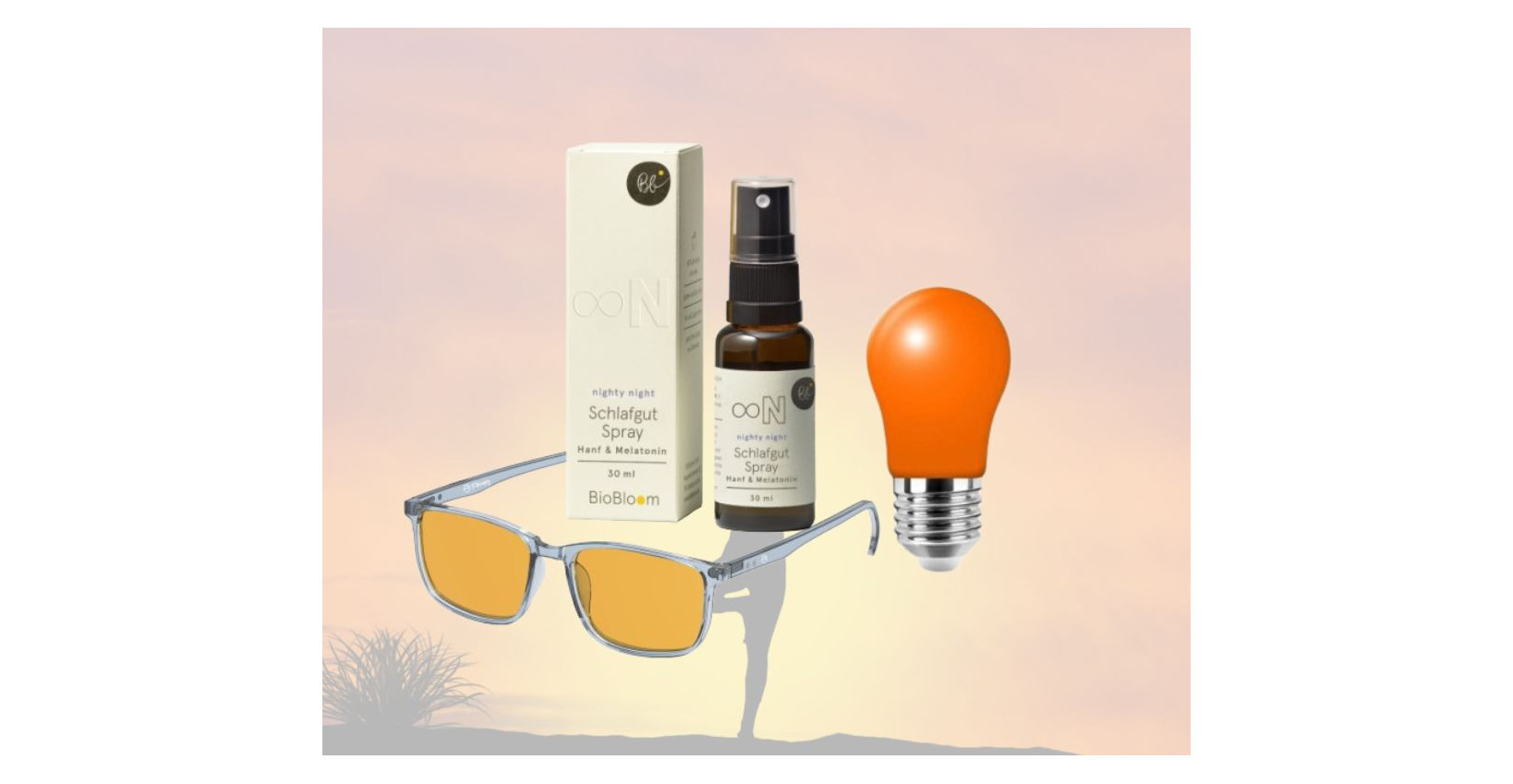
- The ideal way to respect circadian rhythms even when working in the evening or if you want to watch a favourite series is glasses that naturally block blue light and thus do not disrupt the natural biological rhythm of the organism.
Tips to support good sleep
If you struggle with falling asleep and have trouble sleeping, we have some tips for you on how to help your body regenerate well during the night. Definitely try them; long-term it really pays off. Avoid an overheated bedroom, and before going to bed, ventilate. What else can you do to fall asleep better?
- Half an hour before sleep, turn off your computer, tablets, TV, and keep your mobile phone out of reach, as all emit blue light, similar to daytime light.
- Read a book before sleep or engage in meditation.
- Try replacing bright bulbs with orange ones, which support the proper setting of biological clocks.
- You can turn on an ultrasonic diffuser with a hydrolate, which humidifies the air and also gently scents the room. Essential oils are aromatically too strong before bedtime. You can try hydrolate from white rose, Damask rose, Roman chamomile, lemon balm.
- Try taking melatonin as a dietary supplement.
- Have a tea before bed made from lemon balm, St John's wort, or chamomile.
- Blue light blocking glasses for screens are available from us in several variants. All are very high quality and tested by us. A hit are definitely those in pleasant modern designs from Foxman Frames or if you prefer rather massive extravagance, you can choose red glasses, which no one in your family will overlook.