



A hit you should have on hand an hour before going to bed: Blue light blocking glasses
How do blue light glasses work?
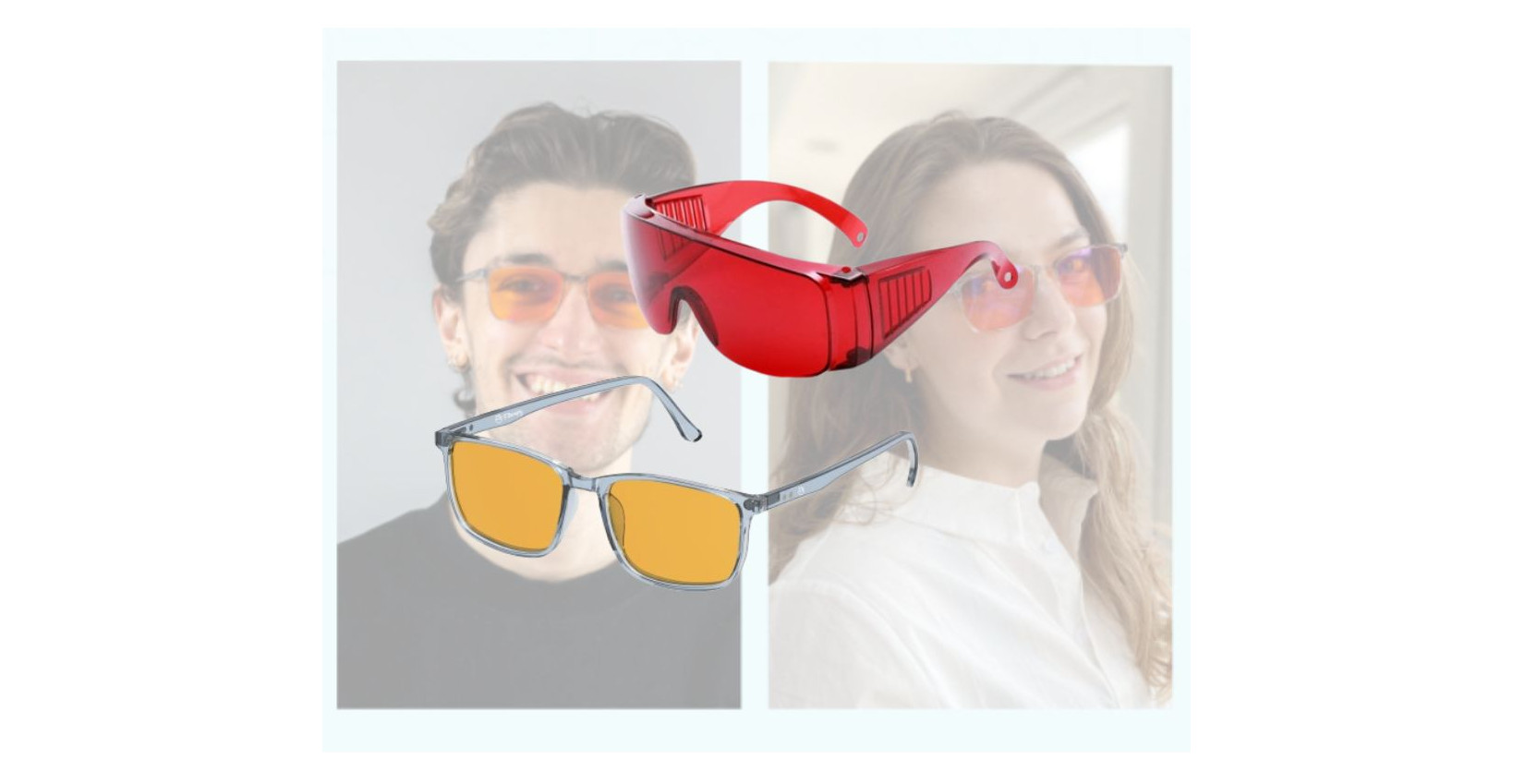
Blue light is a natural part of the light spectrum emitted by natural light sources (the sun), artificial lights from screens, and LED bulbs. It is the short blue-violet wavelengths between 380 and 455 nanometers that are considered potentially harmful. Blue light glasses have lenses that filter out unhealthy blue light. They are designed to provide resting comfort for the eyes during prolonged screen time. The glasses can be neutral or with optical correction. They are available in several colour variants.
Smartphone and computer screens disrupt circadian rhythms
We spend an average of up to seven hours per day in front of screens, some even more. Besides straining our eyes unpleasantly by watching them, experts warn about the effects of blue light emitted from screens. It disrupts natural circadian rhythms (also known as biological clocks, which are a set of neurons regulating biological processes in the body).
If you work from home or must spend a lot of time on your computer for other reasons, it's a good idea to get blue light blocking glasses, emitted from the screen. They contribute to the occurrence of sleep disorders.
Blue (blue-violet) light is the part of light visible to our eyes, consisting of various shades of blue, from turquoise blue to violet blue. Its wavelengths are stronger than the other colours in the spectrum, hitting the retina with greater intensity. Besides smartphones, tablets, and televisions, LED bulbs also emit it. Blue light glasses are designed to filter out this part of the light spectrum and protect the retinal cells from strong wavelengths.
Good habits to help regulate circadian rhythms besides wearing blue light blocking glasses:
- Replacing LED bulbs with more natural lighting that promotes the production of the sleep hormone melatonin (orange bulbs).
- Relaxing before going to bed using meditation.
- Turning off all screens half an hour to an hour before bedtime.
- Reading before sleep by the light of an orange bulb.
When do you need blue light blocking glasses?
The effects of blue-violet light on retinal cells have been proven in several publicly available studies that confirmed this light can destroy cells, for example in pig retina, and cause damage comparable to age-related macular degeneration. Especially for children, who spend increasing amounts of time in front of computer and TV screens, this is a real problem.
Benefits of wearing them:
- Blue light blocking glasses can reduce eye fatigue.
- Long screen observation can cause headaches triggered by blue-violet light; wearing these glasses can eliminate this effect.
- Spending a long time in front of screens and eye strain causes reduced blinking, which can lead to eye irritation and dryness.
Studies regarding blue light's effect on vision:
https://www.ncbi.nlm.nih.gov/pmc/articles/PMC6615932/
https://www.ncbi.nlm.nih.gov/pmc/articles/PMC1568237/
https://pubmed.ncbi.nlm.nih.gov/21617534/
https://www.macular.org/about-macular-degeneration/risk-factors/ultra-violet-and-blue-light