



Don't Be Afraid of CBD, It Is Beneficial for Skin, Mental Health, and You Really Won't Get Oddly High from It
What Exactly Is Cannabidiol?
CBD stands for "cannabidiol." This molecule is one of many cannabinoids found in cannabis. Depending on the cannabis strain, it appears in various percentage proportions; some are richer in cannabidiol, others in the much-discussed THC. Cannabis used for narcotic effects generally contains about 15% THC.
Then there is therapeutic cannabis, which is allowed in some countries and has a lower content of this substance, with its use regulated by state authorities. As for cannabidiol itself, it was discovered in the 1960s but became more widely known only in the twenty-first century. In recent years it has experienced an incredible boom of justified interest.
The benefits of this interesting molecule have become the object of many medical studies, and research on the pharmaceutical potential of CBD continues. If you want to use oil containing CBD, it is necessary to distinguish whether it contains a mild proportion of THC (less than 0.3% THC, the product is labeled with the phrase full spectrum) or none at all.
CBD Is Not THC, Are There Any Common Effects?
Unlike the best-known active substance of the plant, delta-9-tetrahydrocannabinol (the magical abbreviation THC), CBD is another active molecule found in cannabis, but it does not have a narcotic effect on the consumer, whether in the form of dietary supplements, candies, macerates, infusions, or oil. Cannabidiol began to be used in naturopathy as an adjunct analgesic agent (a substitute for opioids).
Several studies have also examined its effect on muscle functions, the musculoskeletal system (arthritis, rheumatism), menstrual problems, migraines, multiple sclerosis or Crohn's disease. Research has also been conducted regarding possible positive alleviation of side effects of cancer treatment (insomnia, pain, anxiety). Studies have also focused on the antioxidant potential of CBD and its use in neurodegenerative diseases (Parkinson’s and Alzheimer’s disease).
Cosmetics with Cannabidiol Are Ideal for Dry and Problematic Skin
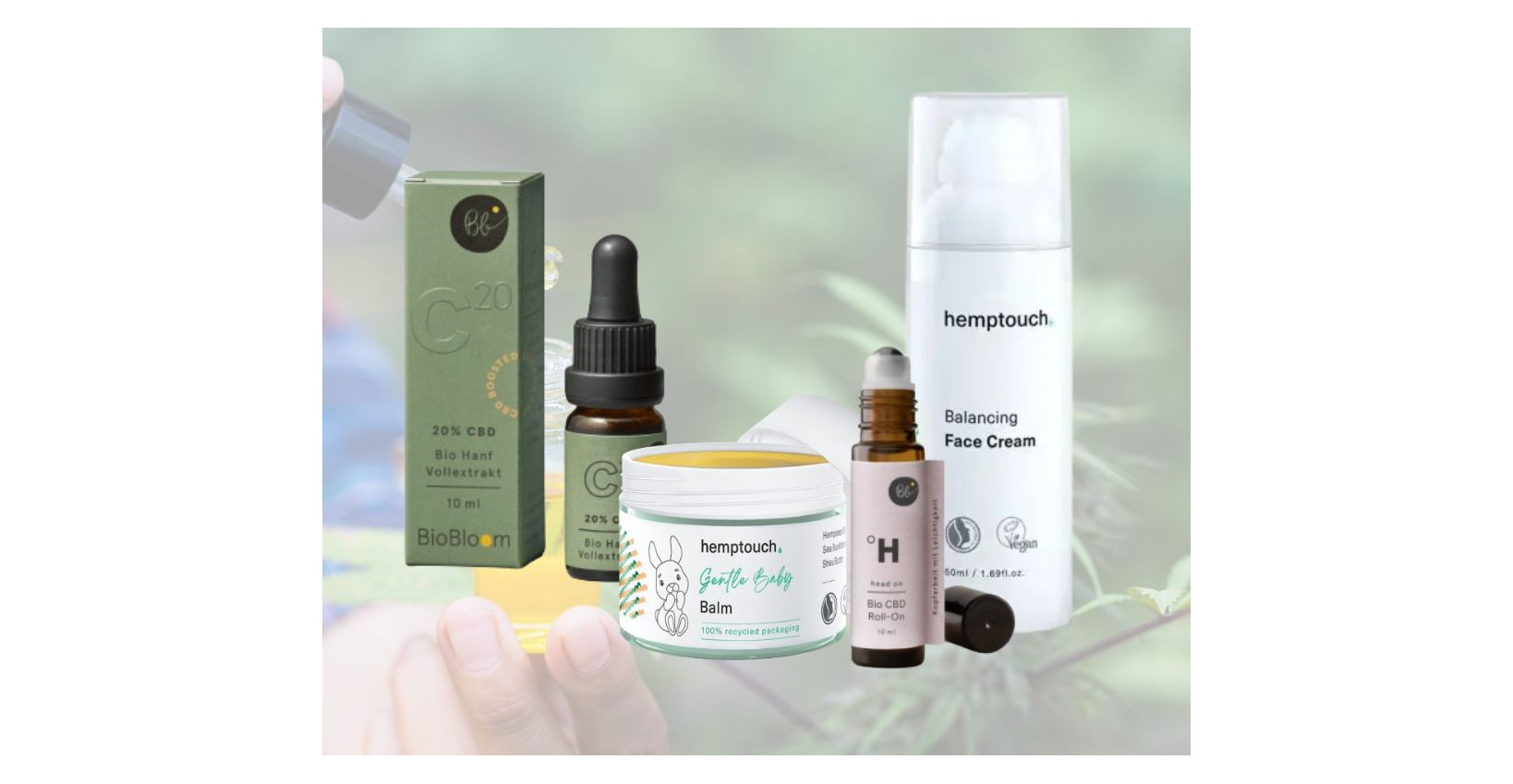
CBD products for skin care, whether in the form of gels, creams or serums contain varying concentrations of the active substance. Cannabidiol is also an excellent helper in skin care, especially for people who have specific skin problems such as acne, rosacea, psoriasis, eczema or enlarged pores. For treatment, you have oils, serums or creams available. This interesting molecule has a positive effect on the skin's surface layer, the epidermis.
It softens it and brings relief from irritation, reduces unpleasant itching and redness (thanks to its anti-inflammatory capabilities). Cannabidiol is also reported as a promising antioxidant. This means it plays a role in protecting skin cells against free radicals that can cause premature aging, maintaining good skin elasticity. Cosmetic CBD-based products are suitable for all skin types, including sensitive and aging skin.
It also has interesting abilities to contribute to balanced skin hydration, supports the natural functions of the lipid barrier, and balances sebum production, thereby eliminating the breeding ground for acne or blackheads (clogged pores). CBD acts on sebocytes, which are cells present in sebaceous glands.
CBD as a Helper for Mental Well-being According to Conducted Studies
The molecule serotonin is a neurotransmitter that acts as a regulator of mood and behavior. More generally, it plays a key role in mental health. According to a study conducted on animals, CBD affects how brain receptors respond to serotonin. Research also shows that cannabidiol acts on parts of the brain responsible for the emergence of stressful situations. According to studies, administering CBD led to a reduction in stress and its physiological manifestations (e.g. increased heart rate), helped support better sleep in people who suffered from it due to long-term exposure to stressful situations and symptoms of post-traumatic stress disorder (PTSD).
Does CBD Have Any Side Effects or Contraindications?
Although it is generally stated that the risks associated with CBD are almost zero, it is necessary to keep in mind some facts before deciding to use it. In high doses it may cause dry mouth, dizziness, nausea, digestive problems or migraines. It is contraindicated in cases of pregnancy and breastfeeding, psychiatric history, kidney, liver or heart problems.
Sources and studies:
https://www.mayoclinic.org/healthy-lifestyle/consumer-health/expert-answers/is-cbd-safe-and-effective/faq-20446700
https://www.health.harvard.edu/blog/cannabidiol-cbd-what-we-know-and-what-we-dont-2018082414476
https://www.ncbi.nlm.nih.gov/pmc/articles/PMC8869992/ Study: Cannabidiol (CBD) in Cancer Management
https://www.ncbi.nlm.nih.gov/pmc/articles/PMC9220307/ Study: Mechanisms of Cannabidiol (CBD) in Cancer Treatment: A Review
https://www.ncbi.nlm.nih.gov/pmc/articles/PMC9780805/ Study: Dysmenorrhoea: Can Medicinal Cannabis Bring New Hope for a Collective Group of Women Suffering in Pain, Globally?
https://www.ncbi.nlm.nih.gov/pmc/articles/PMC9640911/ Study: Cannabidiol for neurodegenerative disorders: A comprehensive review
https://pubmed.ncbi.nlm.nih.gov/36409719/ Study: Potential Utility of Cannabidiol in Stress-Related Disorders
https://www.ncbi.nlm.nih.gov/pmc/articles/PMC8704602/ Study: Enhancing Endocannabinoid Control of Stress with Cannabidiol
https://www.ncbi.nlm.nih.gov/pmc/articles/PMC6319597/ Study: Cannabidiol modulates serotonergic transmission and reverses both allodynia and anxiety-like behavior in a model of neuropathic pain
https://www.ncbi.nlm.nih.gov/pmc/articles/PMC7023045/ Study: Antioxidative and Anti-Inflammatory Properties of Cannabidiol