



Vegan product certification, what to expect from it and what it does not guarantee
Looking for a vegan logo on a product or reading the ingredients?
The market for vegan products is experiencing a real boom. Whether you are an active vegan or just want to use animal ingredient-free products to help protect the planet, you should pay attention. Vegan certification is currently not mandatory, but many companies are beginning to use ingredients that meet the criteria of vegan-friendly cosmetics. Interestingly, the demand for certification of vegan and vegetarian products tripled between 2012 and 2015.
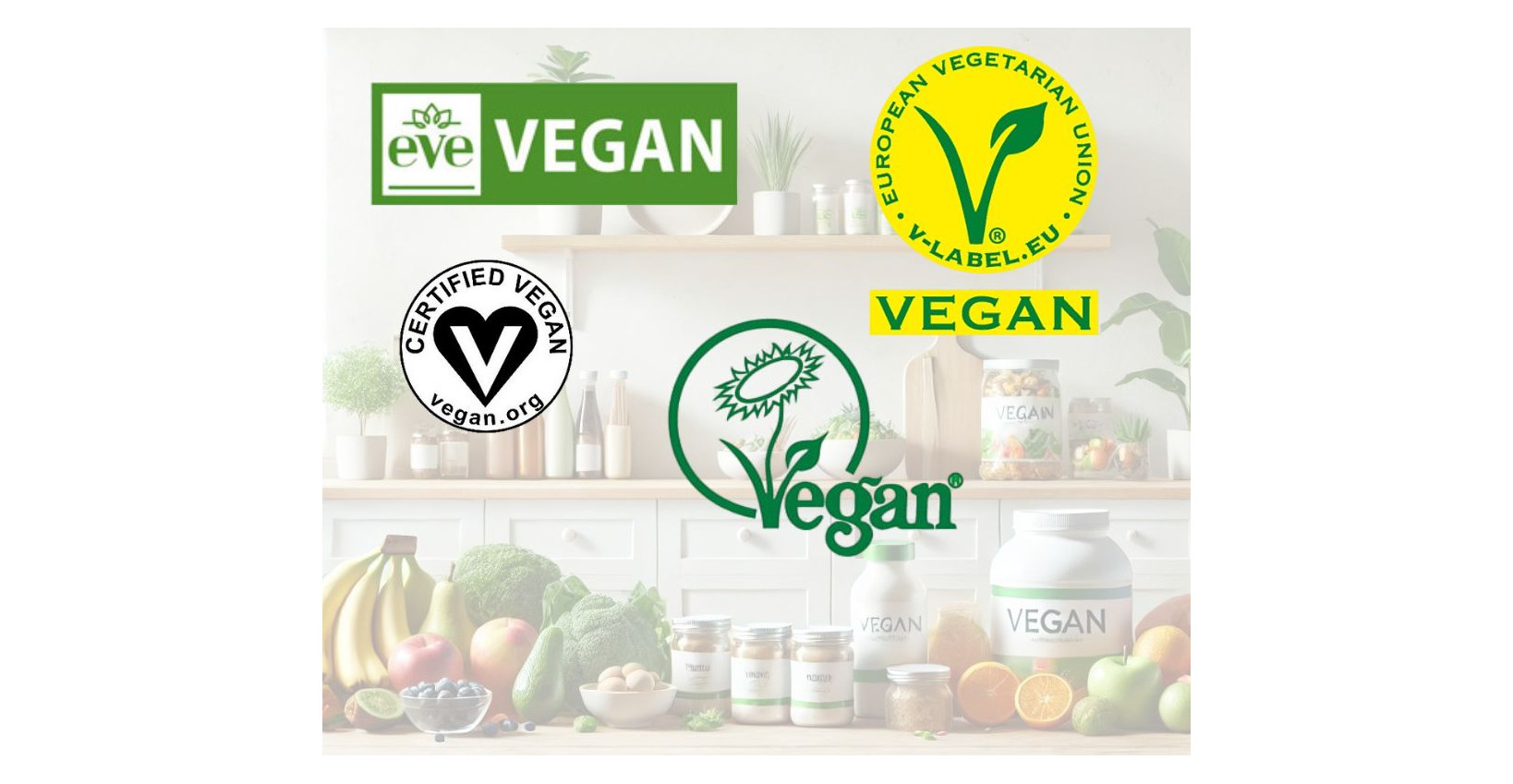
The typical logo you find on vegan products is a green sunflower with the word vegan awarded by the Vegan Society. It is possible to certify cosmetics, food, or dietary supplements. Certification gives products greater credibility and shows the customer that they do not have to painstakingly look up the ingredients contained. Although very high-quality products meeting both organic and vegan criteria can be found, manufacturers do not always manage to certify them, mainly for financial reasons.
About the Vegan Society (the issuer of the sunflower logo)
The Vegan Society is a registered trademark existing since 1944 that provides an international standard for vegan products. A product with their logo contains no primary or secondary animal-derived ingredients and, in countries outside the EU, was not tested on animals. Applicants provide detailed information on raw materials, production, packaging, and processes.
Yellow logo of the European Vegetarian Union
Another commonly used logo is from the European Vegetarian Union (EVU), which applies to vegetarian and vegan products and services. The certification principle is similar to that of the Vegan Society and is internationally recognised.

Local vegan logos
You may also encounter local vegan certifications, such as the French EVE Vegan®, considered one of the strictest standards. It certifies food, cosmetics, textiles, and plastics and controls quality management systems at manufacturers.

Certified Vegan logo
Certified Vegan is a globally known registered trademark guaranteeing that products do not contain animal ingredients or by-products and were not tested on animals. You can find it on thousands of products from over 1000 companies.
Definition of a vegan product
A vegan product contains no animal-derived substances, does not use animal-derived technical means, and was not tested on animals. Production requires excluding any involvement in animal trade.
A vegan product therefore cannot contain:
- Meat or other animal parts
- Fish and seafood
- Eggs, honey, and milk
- Animal wax (beeswax, lanolin)
- Fur, leather, silk
- Royal jelly
- Animal-origin dyes (carmine) and products from insects
- Substances cleaned with animal substances (gelatin, collagen)
- Ingredients made using the above substances
- Sugar filtered with charcoal from animal bones
- Animal GMO products or animal-origin genes
What a vegan certificate does not guarantee:
- Purely natural origin of ingredients
- Overall non-toxic composition
- Limitation of synthetic dyes, fragrances, and endocrine disruptors
- Non-GMO plant ingredients without further certification
- Legislative regulation of vegan claims in the EU
- Compliance of dietary supplements with a non-toxic lifestyle
- Absence of allergens in hair dyes