


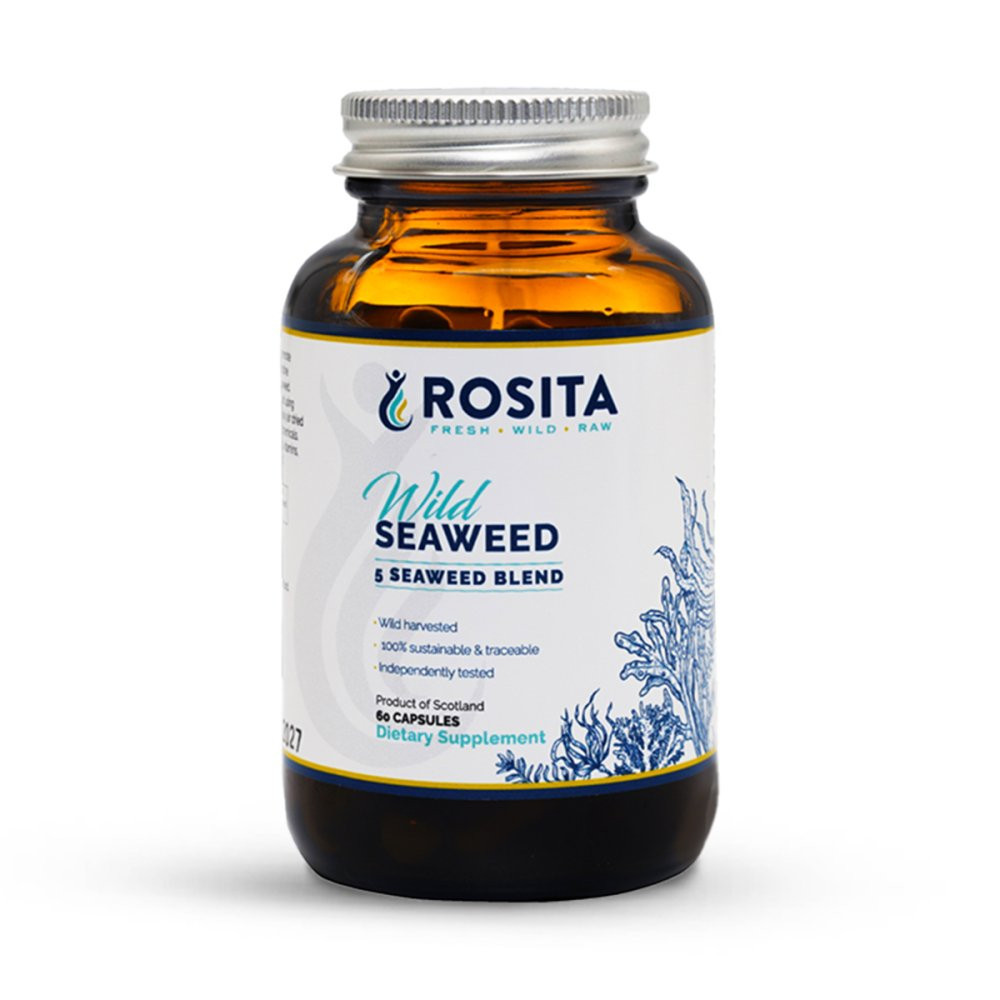
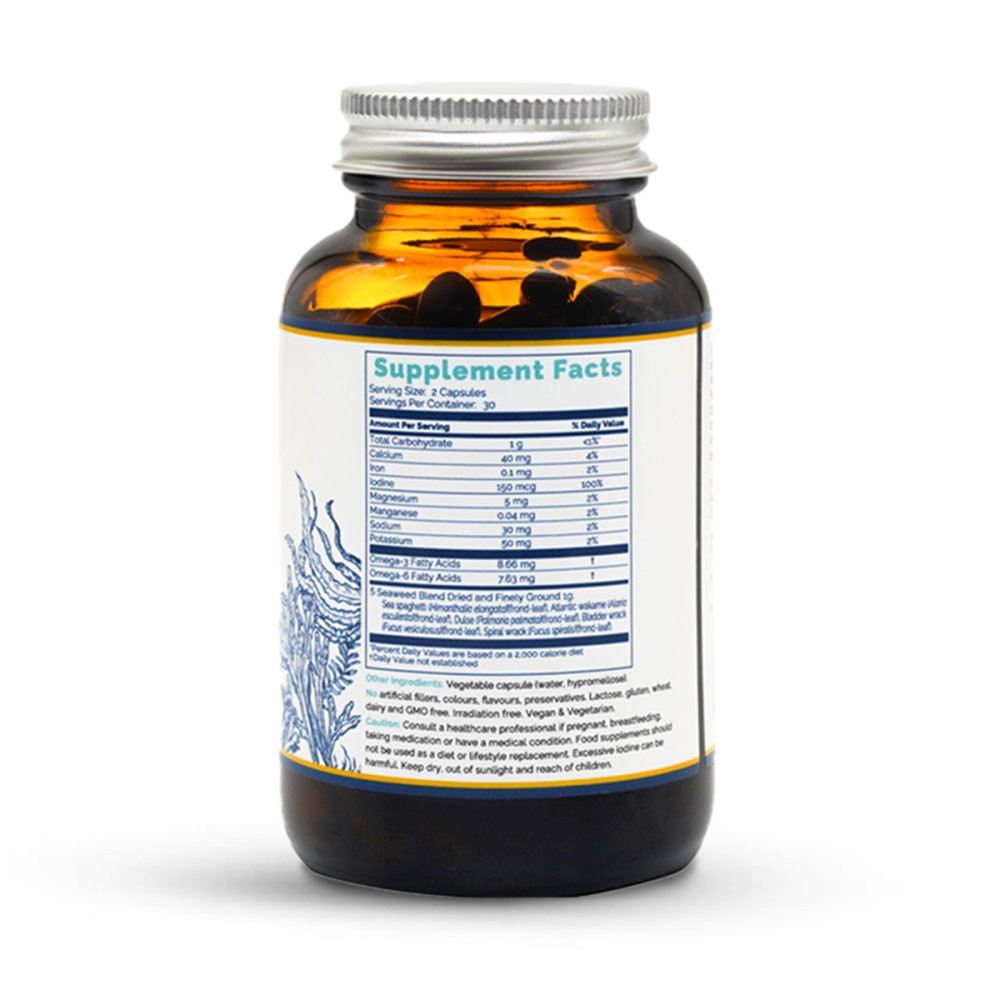
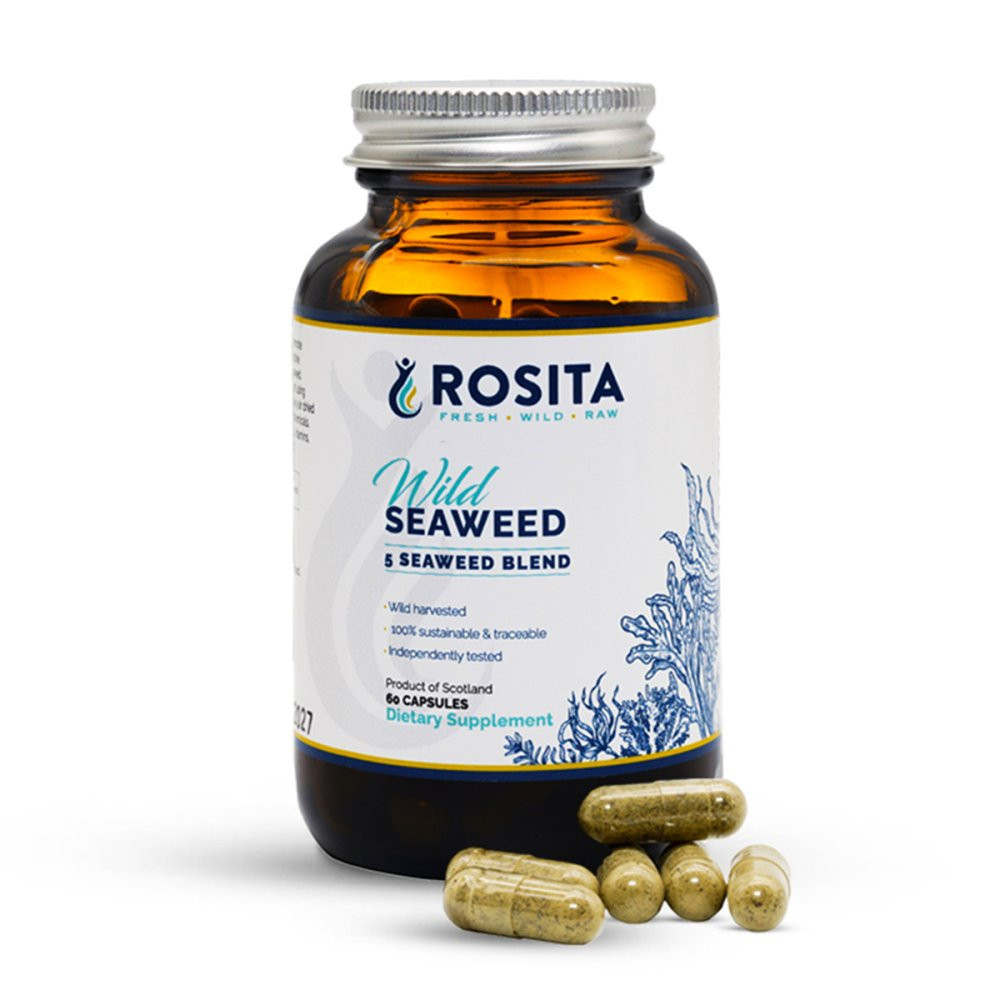





A blend of five seaweeds rich in micronutrients, fiber, polyphenols, and fatty acids. Raw product dried at low temperatures. Sustainable hand harvesting.
Comprehensive blend:
Rich nutritional profile:
Mineral load:
High carbohydrate content:
Seaweed generally contains large amounts of structural, storage, and functional polysaccharides, and the total carbohydrate content can range from 20% to 76% dry weight depending on the seaweed type.
Primarily fiber:
Although carbohydrate content in seaweed is quite high, it mainly consists of fiber that the human body does not absorb. Some carbohydrates present in seaweed can be assimilated and occur in the form of glucose, mannose, and galactose.
All essential amino acids:
Seaweed contains all essential amino acids present in amounts comparable to recommendations by the World Health Organization.
Protein composition:
The proteins that make up seaweed have high levels of glycine, arginine, alanine, and glutamic acid, but often low levels of lysine and cystine.
Red seaweed richest:
Red seaweeds are richer in amino acids than green or brown seaweeds and even correspond to animal sources of amino acids.
Protein content:
Regarding protein content, red seaweeds are richest, with quantities comparable to legumes (30-40% dry matter). Brown and green seaweeds contain 15% and 30% respectively.
Excellent source of plant proteins:
Seaweeds also represent an excellent source of plant proteins, which is especially useful for athletes or people in recovery.
Respect for nature:
Sustainable harvesting of seaweed respecting their natural life cycle.
Hand harvesting:
Hand harvesting during the growth period.
Meets raw food philosophy:
The seaweed is unprocessed, dried at low temperatures to preserve all micronutrients.
Preservation of nutrients:
Drying at low temperatures preserves vitamins, enzymes, and other sensitive nutrients.
Plant-based composition:
Seaweeds:
Other ingredients:
Plant-based capsule (water, hypromellose)
Daily dose:
2 capsules daily
Usage:
Can be opened and mixed into food.
Warning:
Do not exceed the recommended amount.
Content: 60 capsules
Store in a cool and dry place.
Protect from direct sunlight.
Keep out of reach of children.
IMPORTANT:
⚠️ Excessive iodine can be harmful.
Pregnant and breastfeeding women:
Consult a doctor before use.
General warnings:
REGULATION (EC) No 1924/2006 OF THE EUROPEAN PARLIAMENT AND OF THE COUNCIL on nutrition and health claims prohibits labeling health effects on products and places where products are sold (e-shop).
5 types: Himanthalia elongata, Atlantic wakame, dulse, bladderwrack, and spiral wrack.
Aquatic plants rich in micronutrients, fiber, polyphenols, and fatty acids.
Vitamins, antioxidants, polyphenols, carotenoids, omega-3, enzymes, amino acids, fiber, proteins, and minerals.
Calcium, magnesium, iron, zinc, selenium, potassium, and iodine.
Yes, suitable for vegans - plant-based capsules (hypromellose).
Raw - dried at low temperatures to preserve all micronutrients.
Sustainable hand harvesting during the growth period, respecting the natural life cycle.
2 capsules daily. Can be opened and mixed into food.
Consult a doctor before use (due to iodine content).
Excessive iodine can be harmful - seaweed is rich in iodine.
Yes, all essential amino acids in amounts comparable to WHO recommendations.
Red seaweeds (dulse) - 30-40% dry matter, comparable to legumes.
Fiber that supports the growth of beneficial bacteria in the gut.
In a cool and dry place, protected from sunlight and out of reach of children.
For a comprehensive nutritional profile - each seaweed has a different nutrient composition.

Specific References


Your review appreciation cannot be sent
Report comment
Report sent
Your report cannot be sent
Write your review
Review sent
Your review cannot be sent